Why solar panel temperature matters
Understanding how cell temperature affects performance is the starting point for assessing a cooling solution.
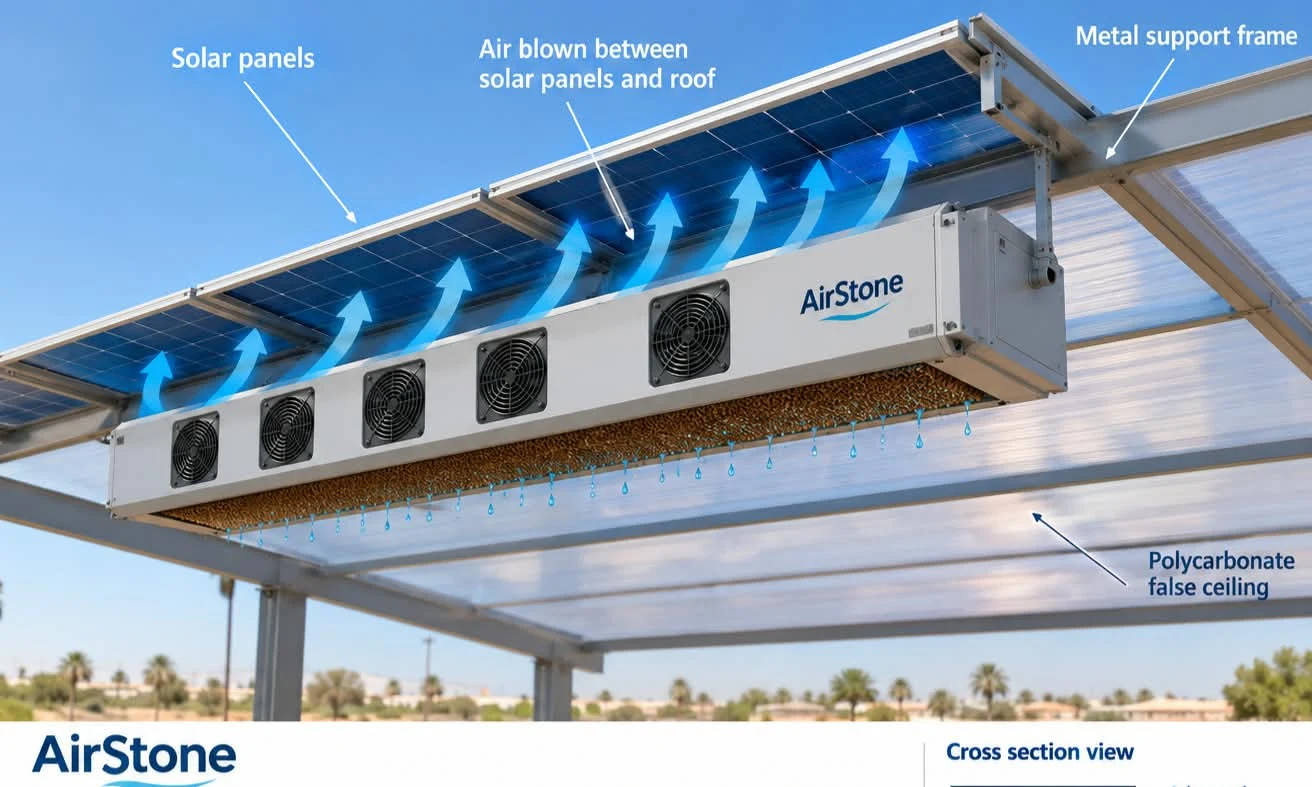
AirStone: Cooling Solar Panels to Improve Energy Production and Performance
Turning Heat Management into a Solar Energy Advantage
Solar photovoltaic (PV) technology is a key contributor to the global transition toward clean energy. However, high operating temperatures can reduce PV module performance, particularly in hot climates such as Egypt, the Middle East, and Africa.
Although solar panels require sunlight to generate electricity, excessive cell temperatures generally reduce their operating voltage and electrical power output, even when solar irradiance remains high.
This is where AirStone comes in: using cooling technology to help improve solar panel performance and increase electricity generation.
How Does Cooling Improve Solar Panel Output?
Solar cells generally operate less efficiently as their temperature rises. The extent of this effect depends on the temperature coefficient specified for each PV module.
For example, if a module has a power temperature coefficient of -0.35% per °C, a cell temperature increase of 30°C above the reference temperature would correspond to an approximately 10.5% reduction in power under otherwise identical conditions.
Reducing cell temperature can recover part of this temperature-related power loss and improve electricity production during hot daylight hours.
How Does AirStone Work?
AirStone is developing a cooling approach that combines airflow and evaporative cooling to help reduce solar panel operating temperatures.
The concept involves passing air through a water-wetted evaporative cooling pad and directing the cooled airflow through a specially designed air path near the solar panels. This airflow is intended to remove heat from the panels and limit excessive temperature rise during operation.
Depending on the system configuration, the solution may include:
A water-wetted evaporative cooling pad.
Fans to move air through the cooling system.
An airflow channel designed to guide air near the panels.
A water circulation and operating control system adapted to environmental conditions.
The actual cooling performance depends on ambient temperature and humidity, airflow rate and distribution, channel design, and the electrical energy consumed by the cooling equipment.
Potential Benefits of AirStone
1. Improved electricity generation
Lower cell temperatures can improve electrical output compared with operation at higher temperatures under otherwise comparable conditions.
2. Better performance in hot climates
Thermal management becomes particularly valuable in locations where solar panels experience high temperatures for extended periods.
3. Potential support in managing localized overheating
More uniform airflow and temperature distribution may help reduce certain localized temperature differences. However, hotspots caused by shading, cell defects, or electrical faults require appropriate diagnosis and corrective measures. Air cooling alone is not a substitute for addressing their underlying causes.
4. A practical approach to solar thermal management
AirStone aims to develop a cooling solution that can be evaluated and adapted to different solar installations, while accounting for water consumption, auxiliary electricity use, installation costs, maintenance requirements, and real-world operating conditions.
How Should AirStone's Performance Be Evaluated?
A reduction in panel temperature alone is not sufficient to demonstrate the overall value of a cooling system. A reliable assessment should compare cooled PV modules with comparable reference modules operating without cooling under similar conditions.
Key performance indicators include:
Panel temperature and temperature distribution.
Electrical power output and energy generation over the test period.
Solar irradiance, ambient temperature, and relative humidity.
Electricity consumed by fans and pumps, as well as water consumption.
Net additional energy generated after deducting the cooling system's electricity consumption.
System reliability, operating costs, and maintenance requirements.
Test results should be documented and independently validated before making definitive claims about specific production gains or energy savings.
AirStone: Building Partnerships for Better Solar Performance
AirStone is developing energy-efficiency solutions that combine cooling and thermal management to improve the performance of solar PV systems in hot environments.
We welcome collaboration with solar panel manufacturers, solar project developers, EPC contractors, engineering companies, and research institutions to evaluate, validate, and advance the technology through practical testing and pilot installations.
AirStone — Cooling for Better Solar Performance.
We believe that effective thermal management can contribute to better solar energy utilization, and that engineering partnerships and independent validation are essential to transforming promising concepts into reliable, scalable solutions.